Gasfitter.ca / PRACTICAL GUIDE
What Is a Direct-Vent Gas Fireplace and Why Does It Matter?
A direct-vent gas fireplace is sealed from your room and uses outside air for combustion. How it works and why it matters in BC homes.
 Gasfitter.ca
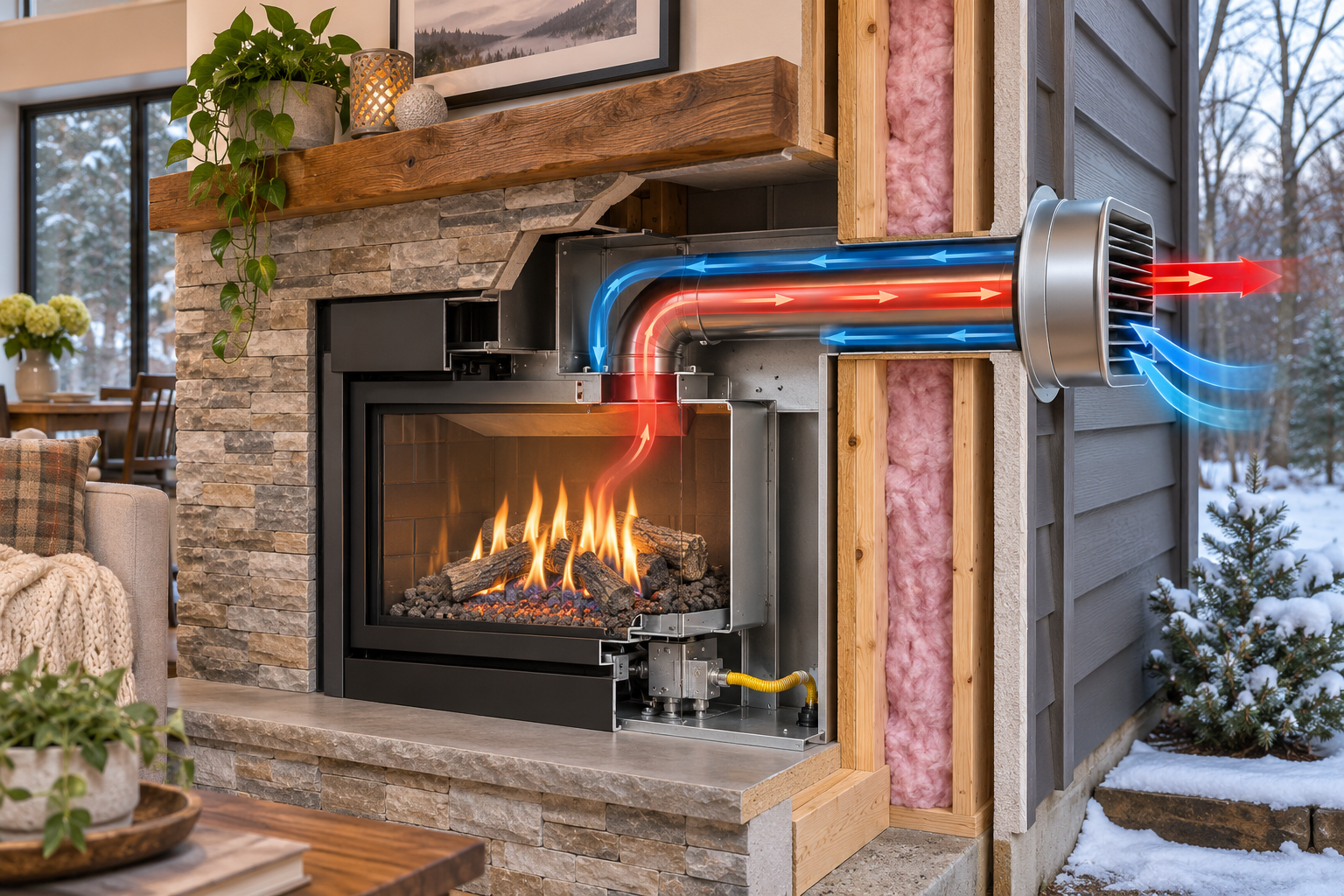
Direct-vent gas fireplaces are sealed units that draw all of their combustion air from outdoors through one pipe and send exhaust gases back outdoors through another, with a fixed glass front separating the flame from your room. Natural Resources Canada describes it this way: outdoor combustion air comes directly into the firebox through one pipe, combustion products leave through the other, and because the unit is sealed, no room air is used for combustion and no heated room air is lost up a chimney. That separation affects combustion-air planning, heat loss and installation options. It does not eliminate the need for approved venting, sound seals, professional service and carbon-monoxide protection.
How it works
Inside the firebox, a gas burner and ceramic logs or media sit behind a sealed glass panel. Two vent paths connect the firebox to the outdoors:
- Intake: brings in fresh outdoor air for combustion
- Exhaust: carries combustion products outside
NRCan explains that the two paths can be coaxial, with one pipe inside another (the outer pipe brings air in, the inner pipe exhausts), or collinear, with two completely separate pipes. Napoleon notes that the coaxial design has a practical benefit: the incoming outdoor air surrounds the hot exhaust pipe, which helps protect nearby combustible materials from the flue's heat and pre-warms the air before it reaches the burner.
Because the system is balanced, with air in and exhaust out at the same terminal or through the same vent run, it doesn't depend on a tall chimney to create draft.
How it compares with other gas fireplaces
NRCan identifies three ways gas fireplaces are vented. Here's how they differ:
| Type | Combustion air from | Exhaust route | Key point |
|---|---|---|---|
| Natural draft (B-vent) | Room air | Vertical vent using rising hot gases | Uses house air and needs a draft hood |
| Power vented | Room or outdoor air, depending on design | Fan-assisted vent | Needs electricity; more flexible routing |
| Direct vent | Outdoors, through a dedicated intake | Sealed vent to outdoors | No room air used; sealed from the living space |
Natural-draft units, NRCan says, have a draft hood that requires extra house air to isolate the burner from outside pressure changes. In a leaky older house that wasn't a big deal. In a modern airtight home with powerful exhaust fans, it can be.
Why it matters
Safety in tight homes
Drawing combustion air from outdoors reduces reliance on room air. The installed venting, seals and appliance condition still require assessment; sealed combustion is not a guarantee against every installation fault. Fireplaces that rely on room air can be starved of air or even backdraft when exhaust fans pull the house into negative pressure.
NRCan also lists the safety of sealed combustion units among the benefits of modern gas fireplaces, noting they offer little chance for combustion gases to spill into the room. That's a meaningful difference for families, especially in newer Lower Mainland homes and condos built to tighter energy standards.
Comfort and efficiency
Since the unit doesn't pull warm room air for combustion, you're not sending heated air outside every time the fire is on. NRCan notes there's no loss of heated room air to the outdoors with sealed units of this type. In practice, that means the fireplace adds heat to the room rather than quietly drawing cold outdoor air in through gaps to replace what's lost.
NRCan also notes that for an energy-efficient R-2000 home, a gas fireplace must be either direct-vented or power-vented, which tells you how seriously building programs take combustion venting.
Installation flexibility
You don't need a masonry chimney. NRCan says direct-vent fireplaces are typically installed on an outside wall with the vent going straight through it, and some models are approved for extended horizontal and vertical vent runs. That opens up options for:
- Adding a fireplace to a room with no chimney
- Townhouses and condos where vertical venting isn't practical
- Converting an old wood-burning fireplace with a gas insert, using liners that run up the existing chimney
What to check before you buy or install
- Vent location. The outdoor terminal must meet clearance rules from windows, doors, decks, gas meters and property lines set out in the installation code and the manufacturer's manual. A licensed gas fitter will confirm what's allowed on your wall.
- Strata rules. In a condo or townhouse, the vent penetrates common property. Get written strata approval before work starts; our sister site Strata Property Services explains how councils usually handle fireplace alterations.
- Permits. Gas fireplace installation in BC is permitted gas work done by a licensed contractor.
- Barrier screen. Check the exact model's required protective barrier and retain it as instructed. Glass and nearby surfaces can become dangerously hot; a barrier does not make them cool to touch.
Caring for your fireplace
The sealed design only works if the seal stays intact. A few habits help:
- Keep the outdoor vent terminal clear of snow, leaves, plants and stored items, especially during Lower Mainland snowfalls when drifts can build against walls.
- Have the fireplace serviced by a licensed technician, including a check of the glass gasket and vent connections.
- Never run the fireplace with the glass removed, cracked or broken.
- Watch for warning signs like soot, unusual flame colour or a smell of exhaust, and shut the unit off if you notice them.
Direct venting is designed to separate the combustion path from room air. Whether repair or a new installation is appropriate depends on the actual appliance, building and approved design.
Identify what is installed before booking service
The useful first question is not whether the flame looks modern. It is which appliance and vent system are actually present. Find the model information using the owner's documentation or an accessible rating label, without removing sealed components or dismantling trim. Record the manufacturer, model and serial number if available. Photograph the whole installation and any visible exterior termination from a safe location. A technician can use those details to prepare for a service visit.
A direct-vent appliance is not automatically a new fireplace, and a gas insert is not interchangeable with a built-in unit. An insert fits into an approved existing fireplace arrangement; a built-in appliance has its own installation requirements. The enclosure, venting and clearances must suit the exact equipment. A decorative front can hide important differences, so a photograph alone does not establish that a replacement is compatible.
Suppose an owner reports that an older fireplace goes out after operating for a while. The booking request should describe when that happens, any displayed message, the control being used and recent work nearby. It should not declare that the unit needs a new valve or that wind is the cause. Symptoms help the technician plan an investigation; they do not justify bypassing controls, opening a sealed chamber or ordering parts by appearance.
Why repairs should address the sealed system as a whole
A fireplace service request often begins with one visible complaint: cloudy glass, unreliable ignition, a noisy fan or an unfamiliar flame. The service scope should still consider the appliance's safe operation. A cosmetic cleaning cannot establish that inaccessible vent connections, seals or controls are satisfactory. Ask the contractor what the visit includes and what limitations will be recorded if parts of the installation cannot be inspected.
Technical Safety BC's annual-servicing bulletin identifies professional fireplace checks including venting, glass seals, burner and pilot components and manufacturer-specified media placement. These are technician tasks, not a homeowner disassembly guide. A useful report identifies the appliance, work completed, defects found and any restriction on further use. It should distinguish a confirmed fault from a recommendation for additional investigation.
Replacing a door gasket or disturbing a vent connection can affect the combustion enclosure. Use the specified components and service procedures for the particular appliance. A part described online as universal is not evidence that it is approved for the model. Likewise, repositioning decorative logs to improve the appearance can change the conditions inside the firebox. Leave media layout and adjustments to the qualified service provider using the correct instructions.
Separate ordinary comfort questions from urgent symptoms
Owners can observe without experimenting. Note whether the concern involves the room fan, the flame, the remote control or the time taken for heat to reach the room. Check only the ordinary user controls described in the manual. Do not repeatedly reset a unit that is locking out, defeat an interlock or operate it with damaged glass. A fireplace that continues to light is not thereby proven safe.
If gas is smelled, a carbon-monoxide alarm activates or someone has symptoms that could indicate exposure, leave the affected area and follow emergency-service and utility instructions. Do not remain inside to collect a better photograph or test the fireplace again. For non-emergency changes such as new soot or persistent unusual odour, stop using the appliance and seek qualified assessment. The distinction is about appropriate escalation, not a remote diagnosis from a blog.
A service booking should also mention recent changes around the building. Renovation, exterior work, landscaping, storage near a termination or damage after weather can be relevant information for the technician. None proves the cause of a problem. Providing a clear chronology is more helpful than confidently assigning blame to a neighbour's fan or a contractor who worked nearby.
A replacement project needs more than matching the opening
For a repair-or-replace decision, request a written description of the fault, repair availability and the scope of any proposed replacement. Ask whether the existing enclosure, venting, termination and gas connection have been assessed for the new model. A similar-looking appliance can require a different arrangement. An existing hole through a wall is not a general approval for whatever vent a replacement happens to use.
The quote should distinguish appliance work from building work. Who opens and restores finishes? Who handles exterior weather sealing, fire separations or access above ceilings where relevant? Which approvals and permits are included? Who protects the room and removes the old equipment? These responsibilities are easier to agree before purchase than after an installer discovers that the decorative surround cannot simply be reused.
A practical comparison might involve repairing an existing control fault versus replacing the complete fireplace. The owner should compare the documented repair scope and remaining uncertainties with the full replacement scope, including associated building work. Avoid presenting replacement as inherently safer or repair as always cheaper. The condition of the actual installation, availability of approved parts and qualified assessment determine the reasonable options.
Vent routes are model-specific, including in existing chimneys
Direct vent does not mean that any short route to the outdoors is acceptable. The selected appliance's instructions constrain approved vent components, route configuration and terminal arrangements. Horizontal and vertical installations may have different requirements. A sketch can communicate a preferred location, but it cannot substitute for a compliant design or field assessment. Keep architectural preferences separate from technical approval.
For example, a hypothetical townhouse owner wants to move the fireplace to a wall beside a patio door. The relevant question is not only whether the unit fits. The project team must assess the proposed terminal location, approved route, building envelope work and common-property approvals. Another location may be necessary. Do not promise that direct venting makes every exterior wall usable.
An existing wood-burning fireplace conversion needs particular care. Technical Safety BC's safety order on gas appliances in solid-fuel fireplaces, revised July 30, 2026, addresses installations in uncertified enclosures. A contractor must assess the actual enclosure and applicable requirements. An intact-looking masonry opening or a neighbour's completed conversion does not prove that another installation is acceptable.
Coordinate fireplace work in condos and townhouses
In a strata property, the appliance and the components around it may have different ownership and maintenance responsibilities. Obtain the registered bylaws, relevant plans and any alteration agreement before assigning responsibility. Do not assume that everything inside the suite belongs solely to the owner, or that everything connected to a fireplace belongs to the strata. Venting through walls or roofs can involve shared property and building systems.
An owner proposing replacement should give the manager a clear scope with the contractor's information, proposed exterior changes and relevant drawings. Ask what approvals are needed and what records must be delivered afterward. Contractors should know any access, parking, work-hour and protection requirements before the visit. These administrative details help avoid an approved appliance arriving for a job that the building has not authorized.
For councils organizing several inspections, use a consistent reporting template but retain appliance-specific findings. One suite's successful service is not evidence for another unit's vent or seal. Track inaccessible components and follow-up visits separately from completed work. The Strata Property Services access guide provides related property-management context; actual access rights depend on the current bylaws and circumstances.
Ask for an informative service record
A good service record helps the next visit start with evidence. It identifies the appliance and date, the reported concern, the checks actually completed and parts replaced. If a test was not performed or an area was inaccessible, the limitation belongs in the report. Terms such as serviced and inspected should not conceal major omissions. Ask for a plain-language explanation of recommendations you do not understand.
Keep records with the operating manual, warranty and any installation or alteration documents. A photograph of the rating information can save time when booking a future call, particularly if the manufacturer offers several similar fronts or control systems. Record approved replacement parts by their proper identification rather than writing only new remote or new gasket. Accurate history reduces guesswork when symptoms recur.
Finally, review the intended role of the fireplace in the home. A decorative appliance, supplemental room heater and planned outage comfort source are different expectations. Verify electricity needs and permitted operation for the actual model before relying on it during a power failure. Direct vent describes an important combustion and venting arrangement; it does not guarantee whole-home heating, outage operation or a maintenance-free appliance.
Frequently asked questions
Does a direct-vent fireplace need room air for combustion?
Its sealed combustion arrangement is designed to take combustion air from outdoors and discharge exhaust outdoors through an approved vent system.
Can a fireplace be replaced without changing its vent?
Only a qualified assessment of the exact new model and existing installation can establish whether any existing components are approved for reuse.
Does direct vent mean maintenance-free?
No. Professional service must address the actual appliance, including venting, seals, controls and manufacturer requirements.
Can I operate the fireplace with cracked glass?
Do not operate with damaged or missing glass. Stop using it and obtain qualified service following the manufacturer instructions.
Sources and further reading
- Natural Resources Canada: All About Gas Fireplaces (background guide, 2004)
- Government of Canada: Details of the R-2000 Standard
- Napoleon: what is a direct-vent fireplace
- Technical Safety BC: annual servicing of gas appliances
- Technical Safety BC: installation of gas appliances into solid-fuel fireplaces, July2026 revision